iNet
University Project - Product Design and Development

Overview
iNet is a social networking mobile app concept designed to help university students connect with peers of different backgrounds. The project was a 3-person group project for the course "Product Design and Development" at the Chinese University of Hong Kong, where I acted as the UI/UX designer.
Context
The app targets students who want to expand their social circle beyond their immediate circle. Particularly for freshmen adapting to a new environment, exchange students, and local students wanting to meet people from different backgrounds.
Design Process
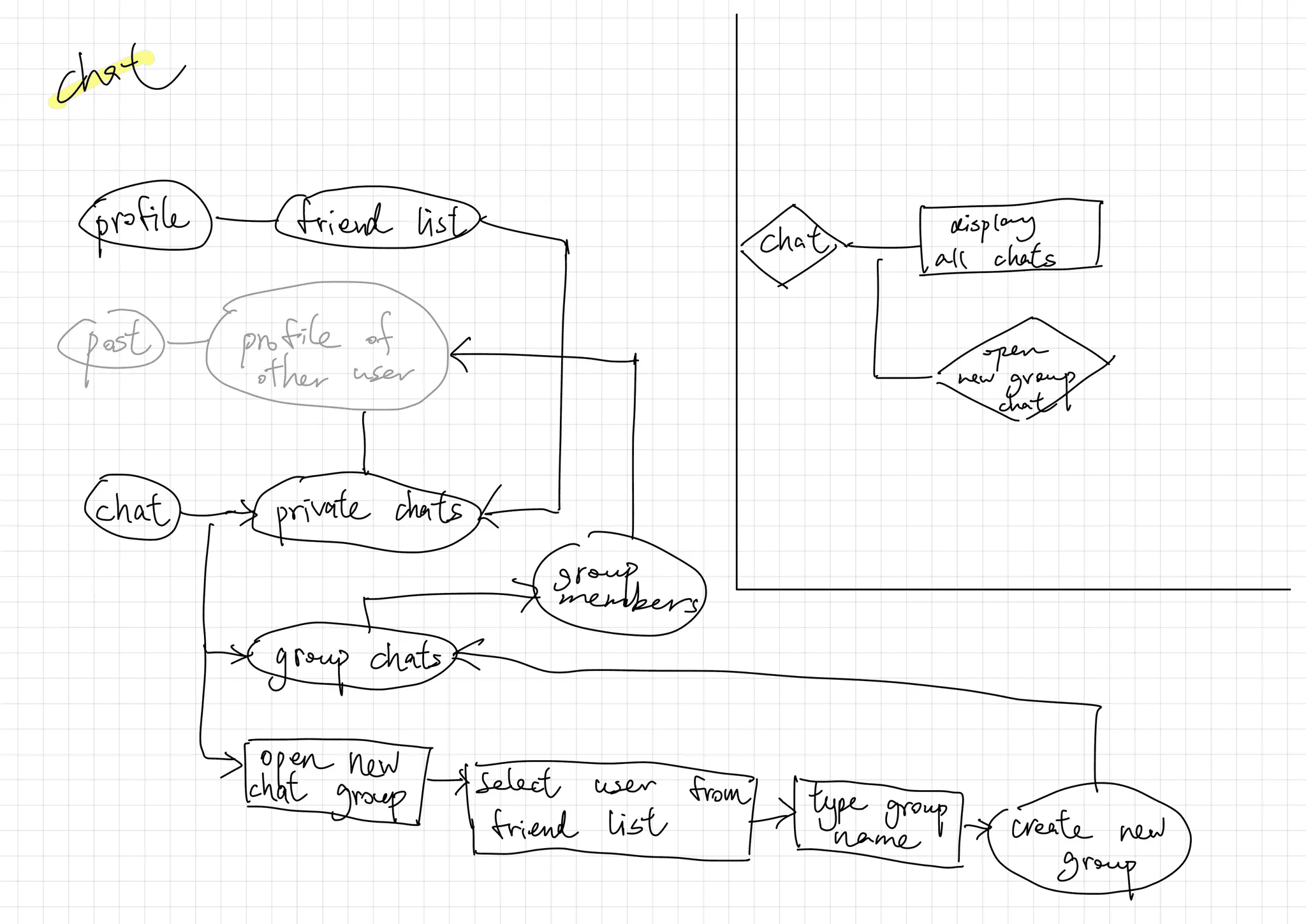
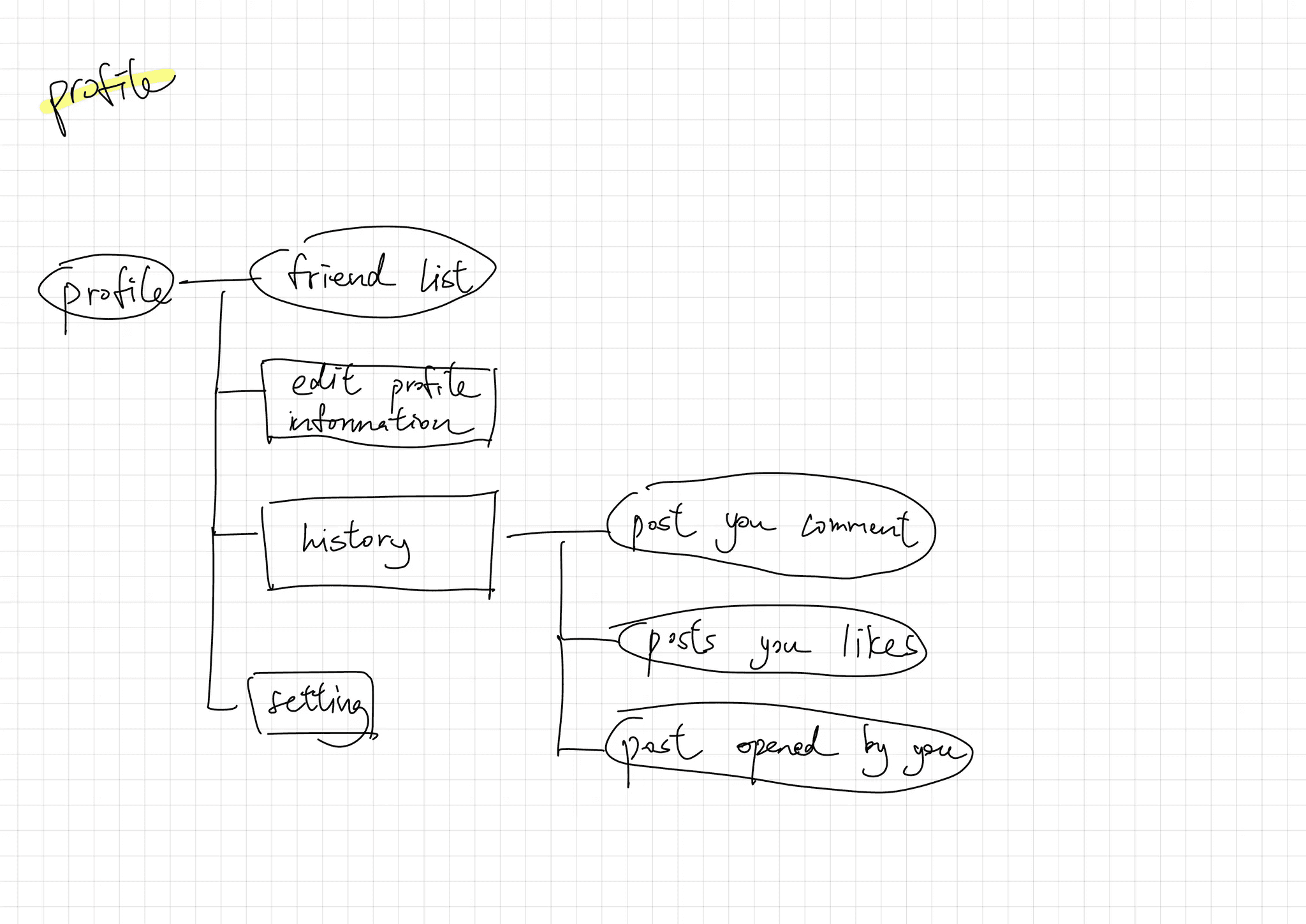
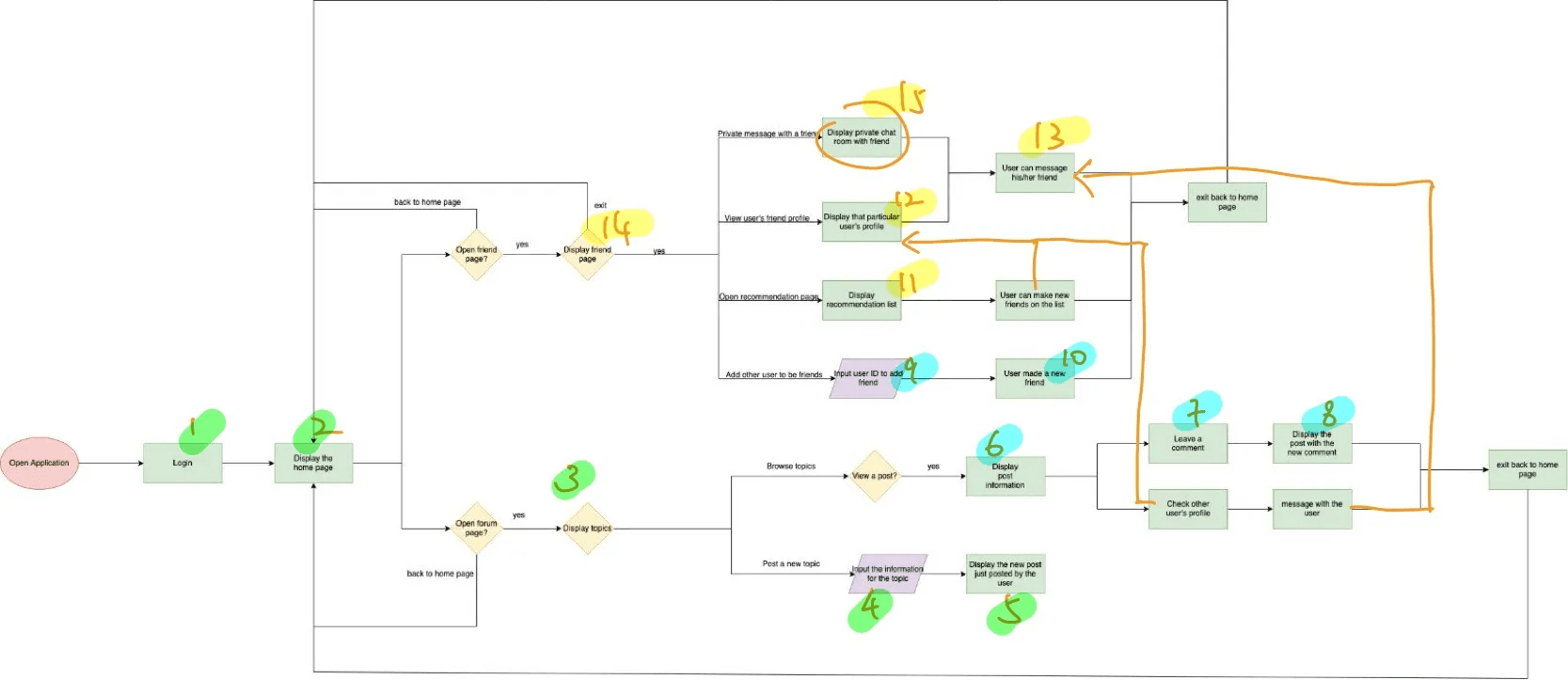
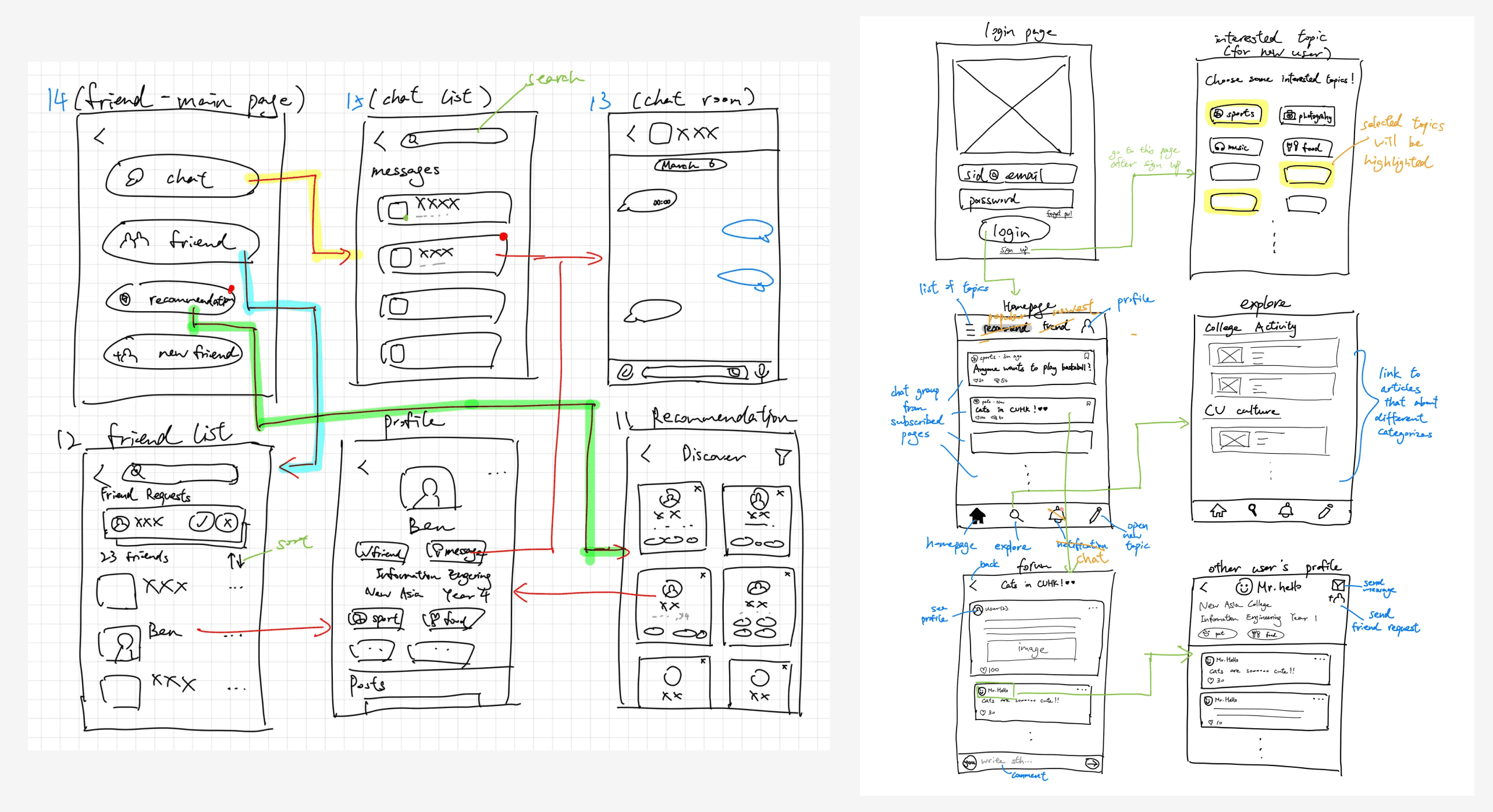
The team started with brainstorming the core features: a friend list with recommendations, private and group chat, a discussion forum, and a friend-adding system. I mapped out the logic flow and user journeys before moving to wireframes.
  | 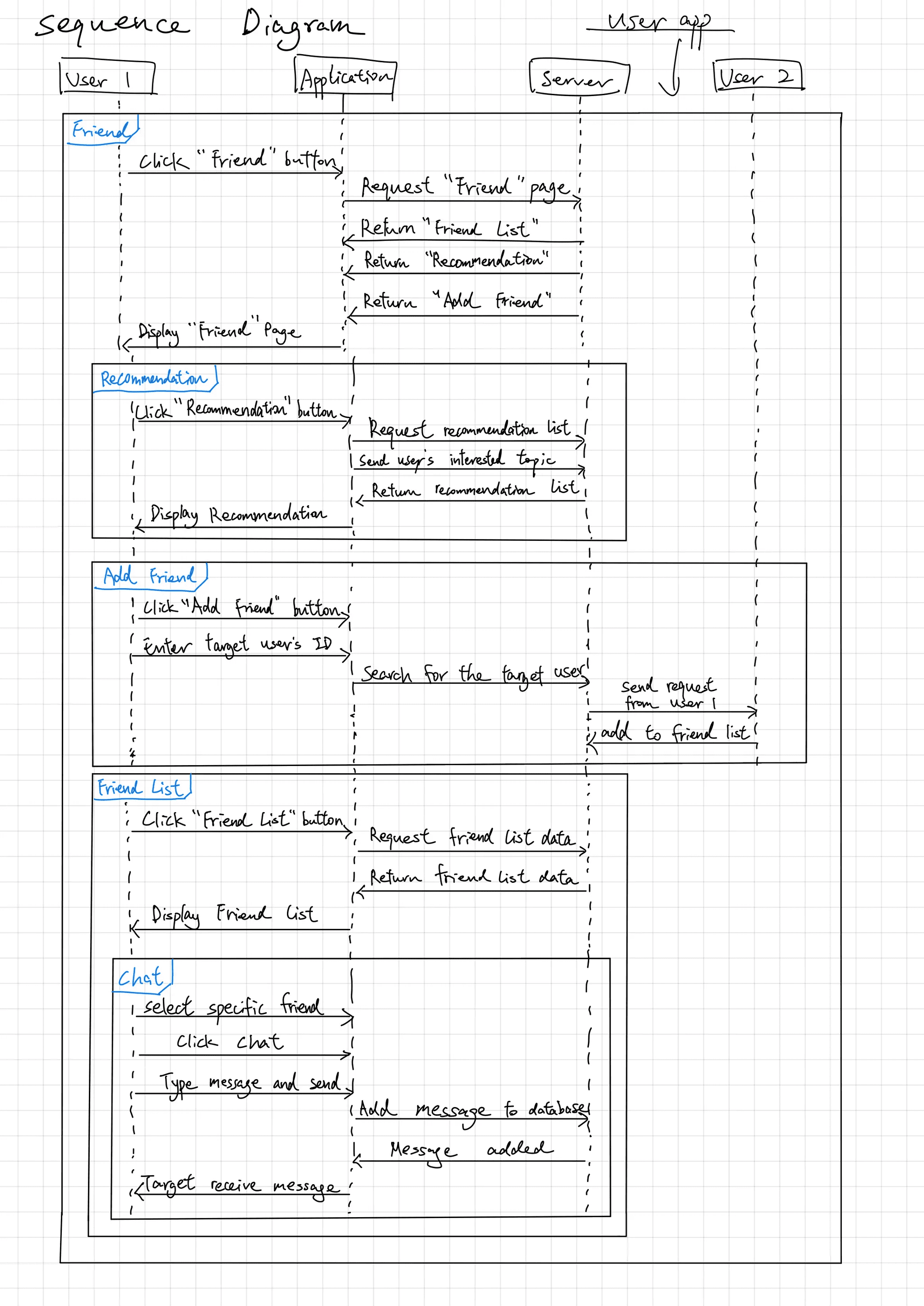 |
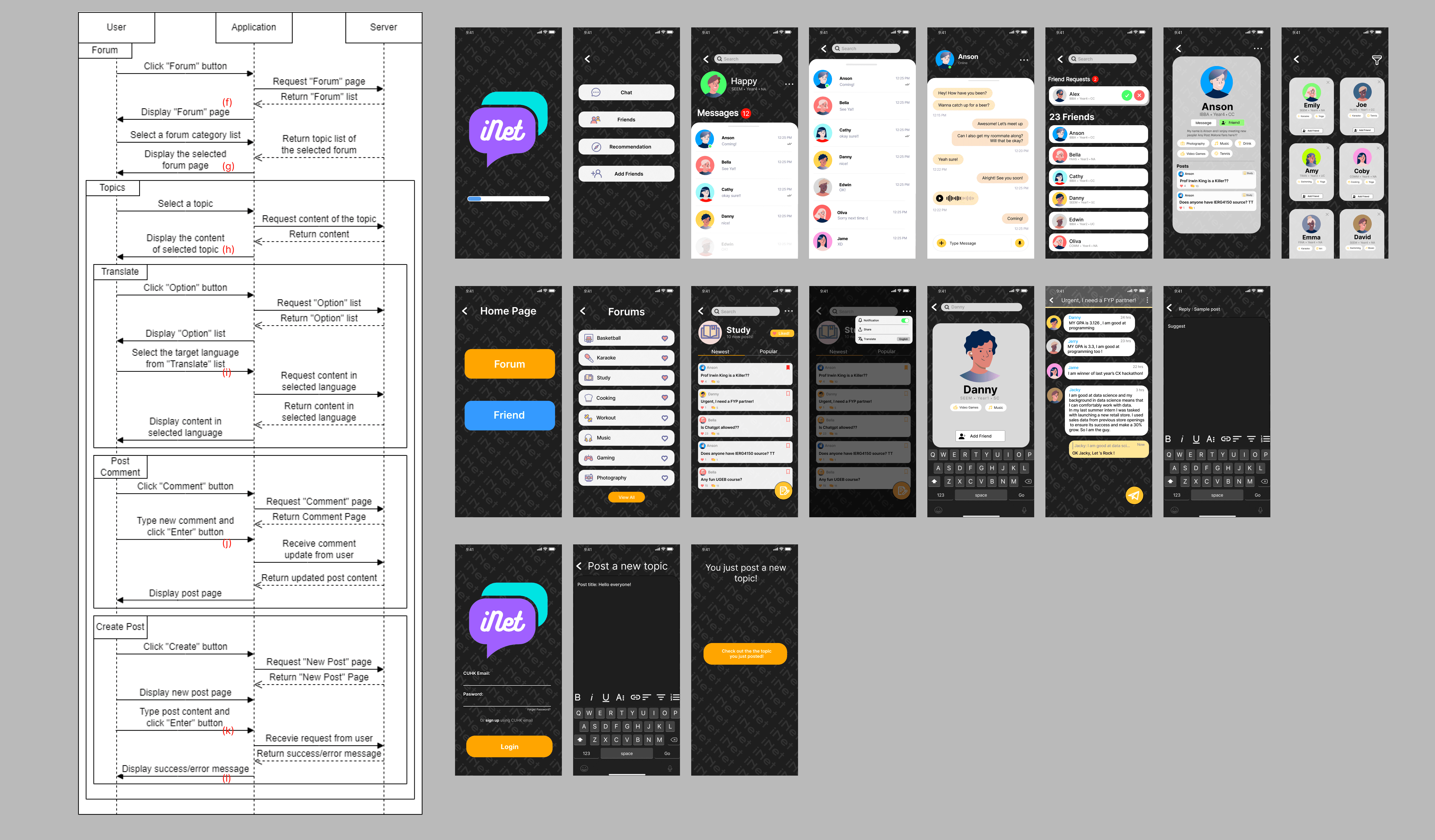
A sequence diagram was produced to define how the app's key interactions: adding friends -> chatting -> browsing recommendations, would work between the user, app, and server.
UI Design and Iteration
For the visual direction, I chose a dark theme targeting a Gen Z audience, with consistent components, pull-up menus for interactivity, clear back navigation, and error-prevention through intuitive button labelling.
After the initial hi-fi screens were completed, the client (the course instructor) requested two additions: an in-app translation function to address language barriers between students, and categorisation of the forum topics. Both were incorporated into the final design.
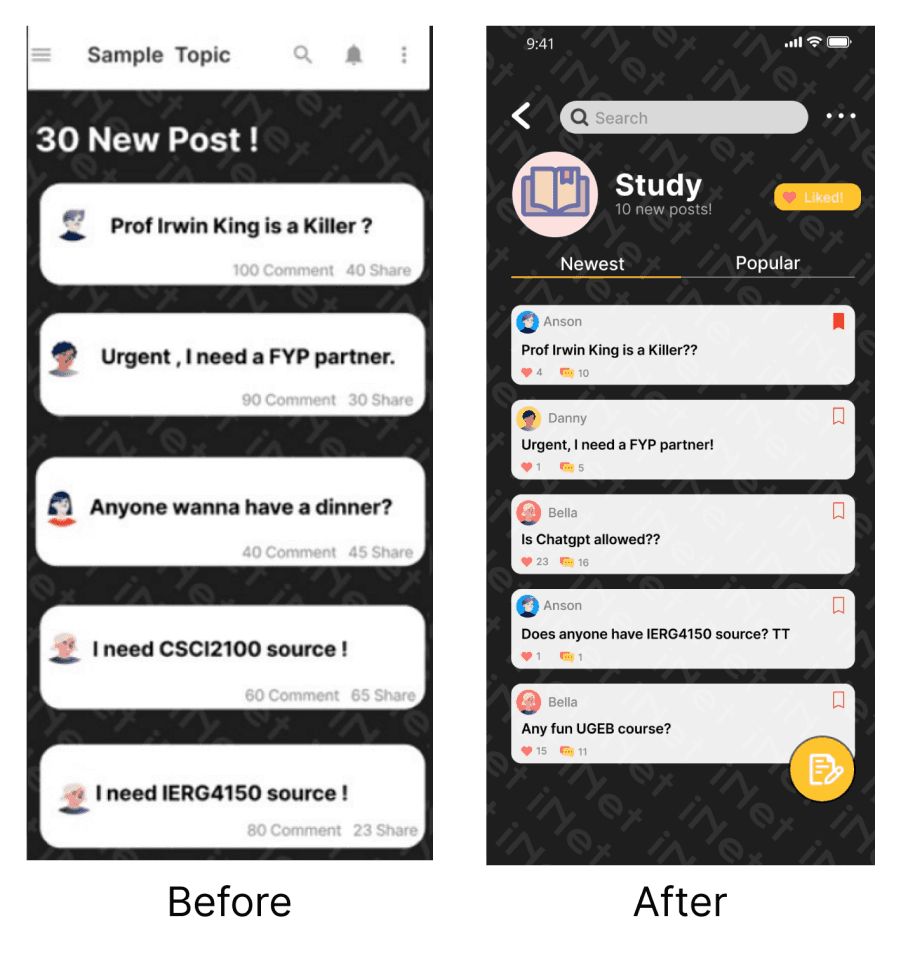
I also refined a groupmate's forum screen to improve visual hierarchy and readability, aligning it with the overall design system.
Reflection
This was my first experience designing as part of a team with defined roles. Keeping visual consistency across three people's work was harder than expected. Small decisions about spacing, colour, and component style add up quickly. Refining my teammate's screen taught me that giving and receiving design feedback is a skill in itself, and that a shared design system from the start would have saved significant time later.